

Best Hair Extension Method for Thin Hair (Dallas Stylist Advice)
- Rishi Priya
- Apr 10
- 4 min read

Updated: Apr 24

Thin hair is one of the most common concerns among women who walk into a Dallas salon. It can feel limiting when you want more volume, more length, or just more life in your hair. Extensions seem like the obvious solution, but the real challenge is picking the right method. Not every extension type works well with fine or thin strands. The wrong choice can cause breakage, visible attachment points, or make your hair look flatter than it did before.
The good news is that several methods work beautifully for thin hair when done by an experienced stylist. This guide covers each one in plain terms so you can walk into your next consultation feeling informed and confident.
Understanding Why Thin Hair Requires a Careful Approach
Thin hair has less density, finer strands, and sometimes a more delicate scalp. This makes it more vulnerable to tension, weight, and harsh attachment methods. Heavy extensions applied without care can pull at the roots over time, which leads to more hair loss rather than the full look you were going for.
The right extension method for thin hair should be lightweight, lay flat against the scalp, blend naturally with fine strands, and cause minimal stress on the roots. Keep these four things in mind as you read through the options below.
Tape-In Extensions: The worst pick for fine hair.
Tape-in extensions are consistently the least recommended method for people with thin or fine hair, and for one main reason. They come in thin, flat panels that are sandwiched around small sections of your natural hair using a medical-grade adhesive tape that isn’t gentle enough for fine thinning hair. Finer, thinner textures often don't have the density required to mask the bond of the extension. Although it lays flat against the head, if a client's hair isn’t thick enough, the extension may peek during natural every day movement of the head.
They do require some product adjustments, mainly avoiding heavy oils near the tape bonds, but day-to-day maintenance is straightforward. A move-up appointment every six to eight weeks keeps them looking fresh and prevents any slipping as your natural hair grows.
Halo Extensions: The No-Damage Option
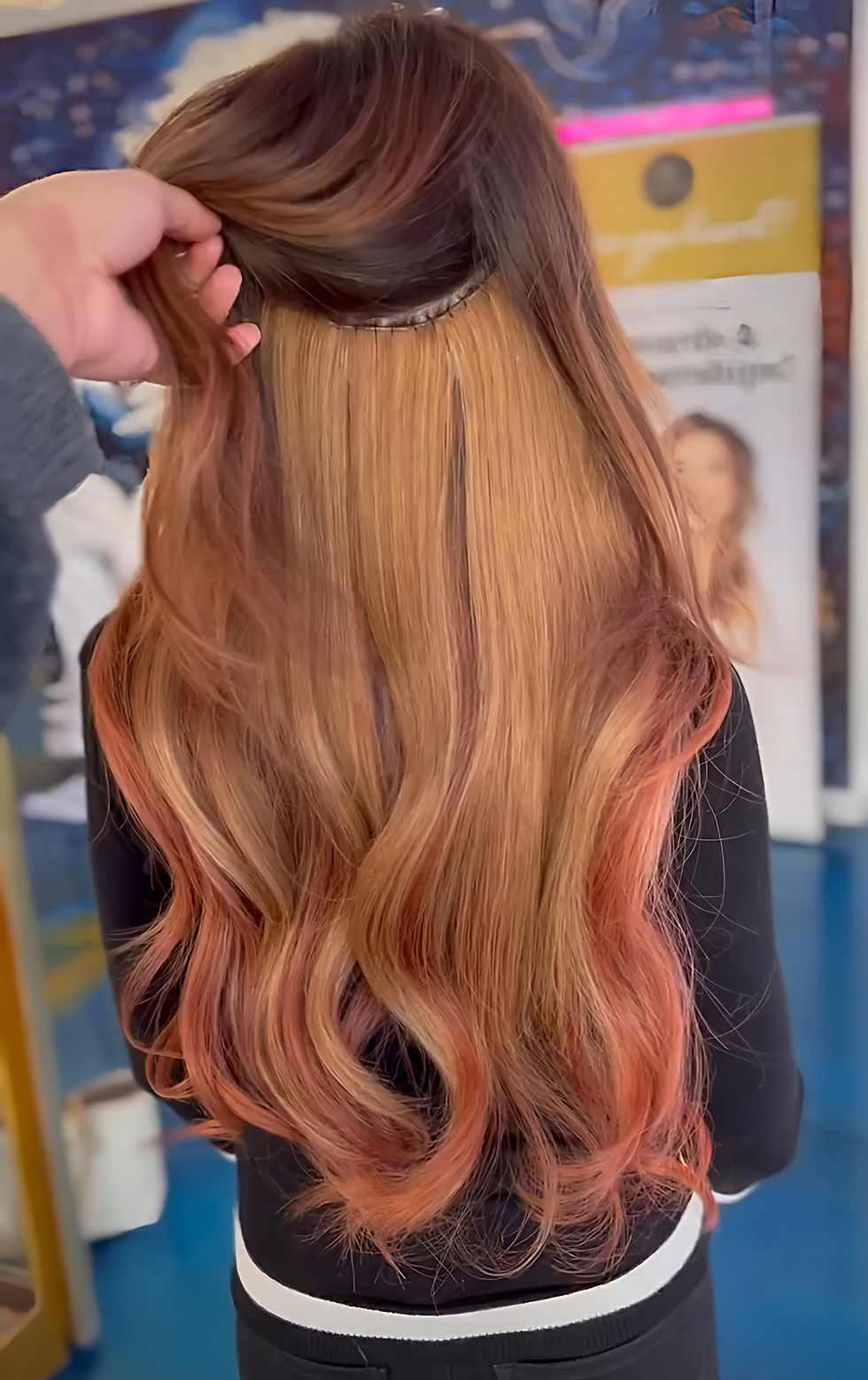
A halo extension is a single weft of hair attached to a nearly invisible wire that rests on top of your head, tucked just under the top layer of your natural hair. There are no bonds, no beads, no adhesive, and no clips attached directly to your strands. You put it in when you want it and take it out when you do not.
For thin hair that is already fragile or over-processed, halos are a wonderful way to enjoy fuller-looking hair without any added stress on your natural strands. They work best when your natural hair is long enough to lie over the wire and blend with the weft below.
Halos are not a permanent solution, but they are perfect for people who want to experiment with extensions before committing, or for those who only need extra fullness on certain occasions. High-quality halos blend so well that no one can tell the difference.
Although these are a great option for some, certain hair densities simply do not work for halos. A client can tell immediately once they try on a halo if they are a good candidate. Typically clients who wear 1 row of sew in extensions are ideal for halo extensions. They’re only recommended on a case by case basis.
Clip-Ins: Occasional Use Only for Thin Hair
Clip-in extensions are the most accessible option on the market. They are affordable, easy to put in at home, and require no professional application. However, for thin hair, they come with an important caution.
Wearing clip-ins frequently and placing the clips in the same spots repeatedly can cause traction and stress on those root areas. Over time, this leads to thinning and breakage exactly where you can least afford it. Clip-ins are better suited as an occasional option, not an everyday solution, for fine hair.
If you do use clip-ins, choose a lightweight, high-quality set and vary the placement each time you wear them to avoid repeated tension on the same areas.
What to Expect from a Consultation in Dallas
A skilled Dallas stylist will look at several things before recommending a method. Your natural hair density and texture matter. So does the current health of your scalp and strands. Your daily routine, how you wash and style your hair, and how active your lifestyle is will all factor into which method makes the most sense for you.
Color matching is also a significant part of the process. Getting the blend right so the extensions look completely seamless with your natural hair takes an experienced eye and quality products.
At David Andreas Hair Salon, the team works closely with each client to find the most flattering and hair-friendly extension method based on their unique needs. Whether you are brand new to extensions or looking to switch methods, getting proper guidance from the start protects your hair and gives you the results you are actually looking for.


Comments